

Industrial & Commercial Weed Control
Operating since 1966 and serving small businesses, utilities, and refineries throughout the mid-Atlantic and mid-western states, we are industry leaders in providing vegetation management services for governmental, municipal, industrial, commercial and residential markets.
Weeds® is fully licensed and insured with coverage that exceeds most industry standards.
Our services
-
Consulting Services
Leverage our industry-leading knowledge and experience in vegetation management services.
-
Industrial Vegetation Management
Create bare ground environments with long-term residual control on land of any size and acreage.
-
Bush, Invasive, & Exotic Weed Control
Clear and control vines, briers, saplings, and other fast growing weed species.
-
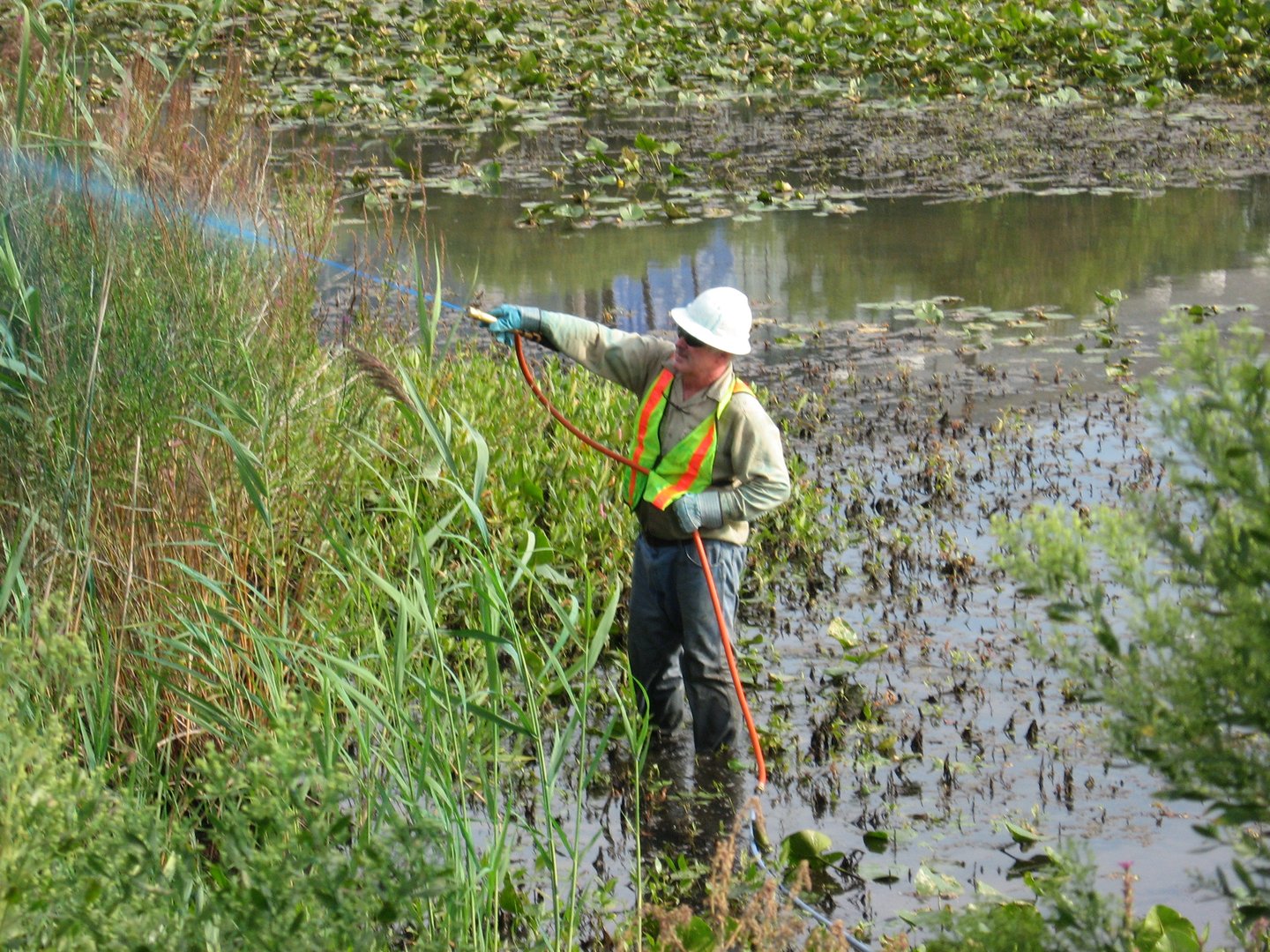
Aquatic Weed Control
Clear unwanted algae and aquatic weeds or use ultrasound control for healthy pond ecosystems
-
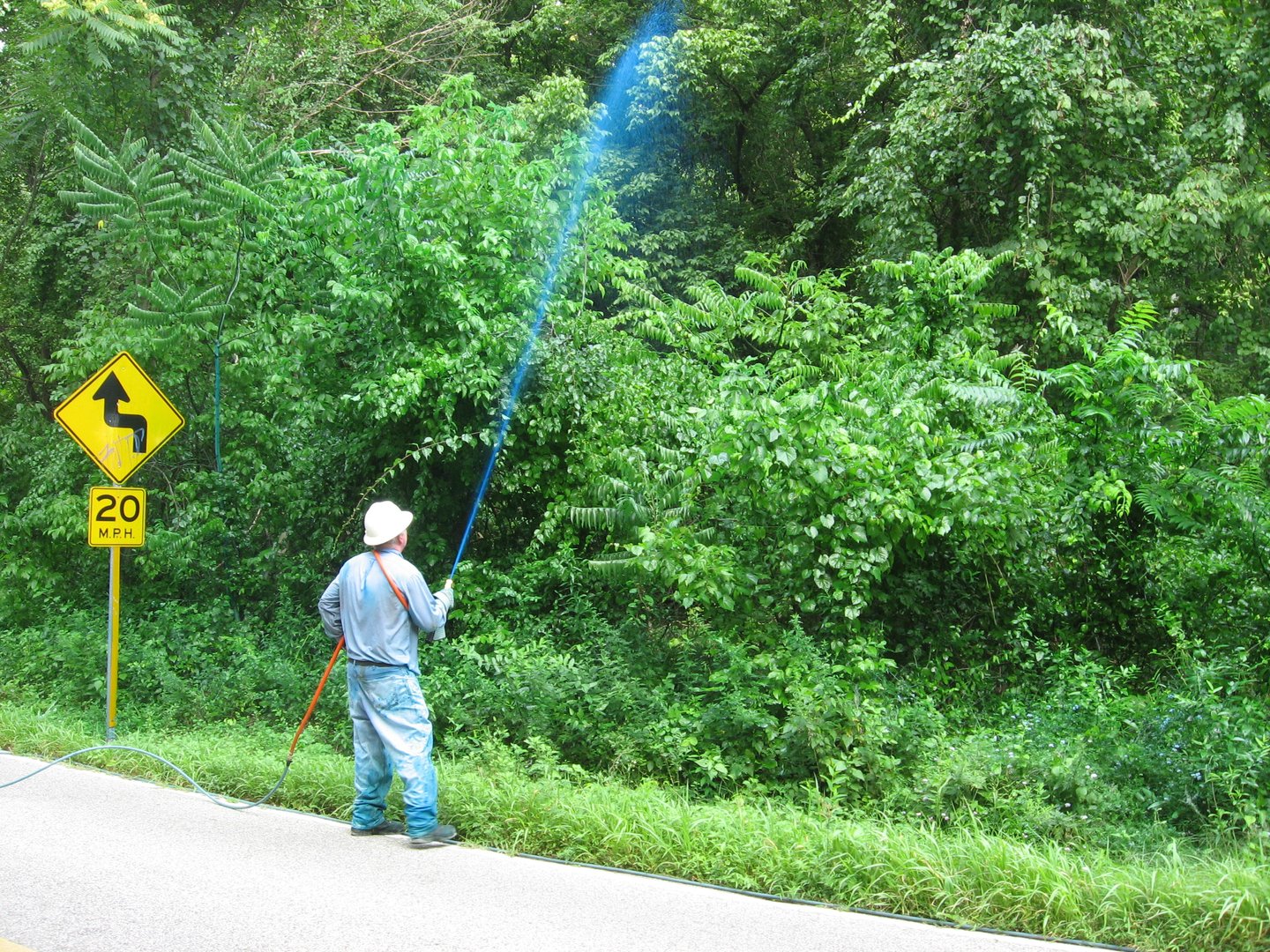
Roadside Vegetation Management
Create and maintain safer lines of site on roadsides for states, townships, and local municipalities
-
Warm Season Grass Meadows
Lower maintenance costs with beautiful, custom-blended green spaces and meadows
Our Equipment
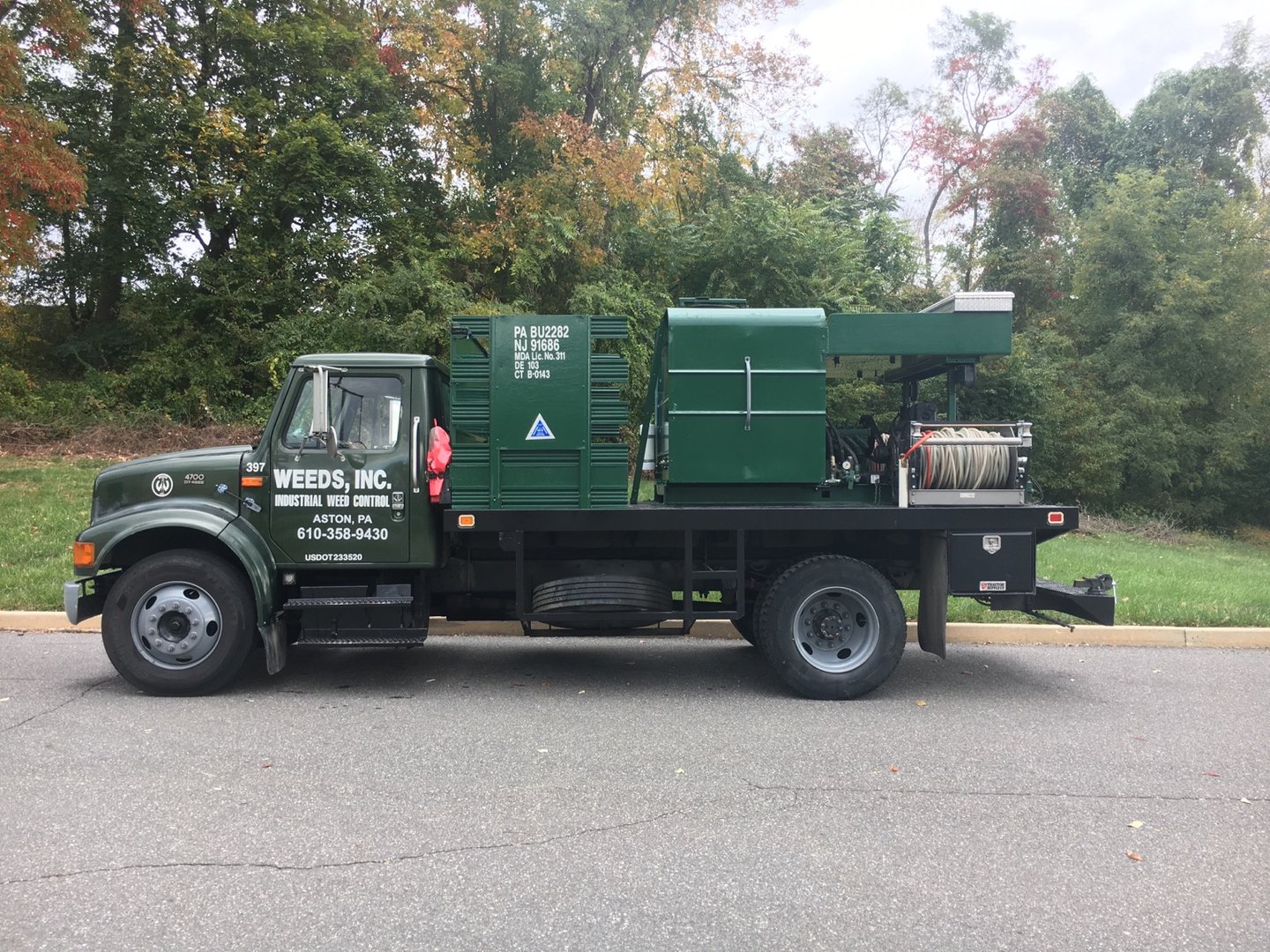
Our fleet of trucks include sprayers that range from 200-2000 gallons mounted on late model international chassis, pick-up trucks and all-terrain vehicles. Maintenance is performed on a regular basis that keeps all units in top working order.

Our Offices
At your convenience, we would appreciate the opportunity to review your past programs with you and also to review our present requirements to find out where we can be of service.
We are open Monday through Friday, from 8:30am - 4:30pm.
Weekends are by appointment only.
Aston, PA
250 Bodley Rd
Aston, PA 19014
(610) 358-9430
Fax: (610) 358-9438
Bethlehem, PA
250 Bodley Rd
Aston, PA 19014
(610) 358-9430
Fax: (610) 358-9438
Uniontown, PA
250 Bodley Rd
Aston, PA 19014
(610) 358-9430
Fax: (610) 358-9438
Chicago, IL
12807 South Homan Avenue Rear
Blue Island, IL 60406
(708) 389-0702
Fax: (708) 389-1146
Get started with Weeds®, today.
No two projects are the same, which is why we create customized
programs to fit your needs with guaranteed results.